Summer tours sell fast. Don’t miss out; book yours now.
News and updates from the Frank Lloyd Wright Foundation
Science fiction and architecture are both practices that imagine—and critique—new worlds. Frank Lloyd Wright’s work was both a critique of the way we build and a projection about how our built world could change. Wright wasn’t just designing a new built environment, his work was always also addressing the political and economic architecture of future societies. Some particular examples of the way in which his projects have been used in science fiction show the complicated relationship between his social and spatial imaginations.
Fred Scharmen | Nov 15, 2019
The cube is an essential building block of architecture when it comes to understanding the built environment. In this hands-on activity we blend the geometric forms Frank Lloyd Wright was inspired by with the Japanese art of paper folding.
Frank Lloyd Wright Foundation | Nov 13, 2019
In the final part of her learning by doing series, Frank Lloyd Wright Foundation 2018-2019 Graphic Design Fellow Meagan Vanderhill reflects on the process and dissects what she learned from applying Wright’s principles to her life.
Meagan Vanderhill | Nov 12, 2019
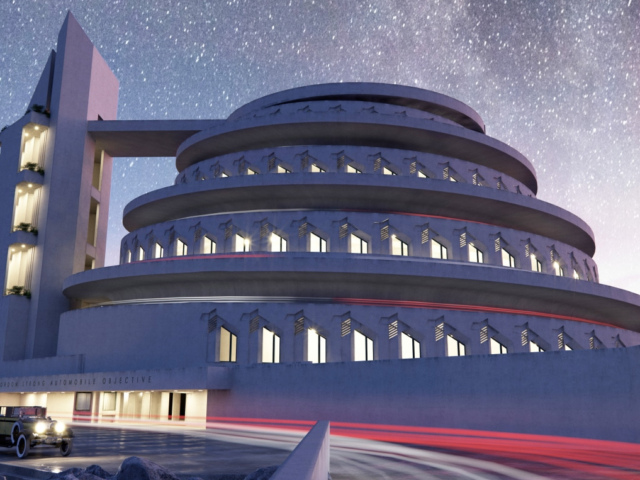
In the fall of 1924, Chicago businessman Gordon Strong commissioned Frank Lloyd Wright to design a resort facility for the summit of Sugarloaf Mountain, Maryland, Strong’s rural estate near Washington, D.C. Referred to by client and architect as an “automobile objective,” the structure was to attract the large motoring public which had evolved in post-World War I America. Wright’s design was one of the most striking of his career. Inside it contained a huge domed planetarium; outside it resembled a circular ziggurat, with concrete automobile ramps spiraling up to the top and back down again.
Mark Reinberger | Nov 4, 2019
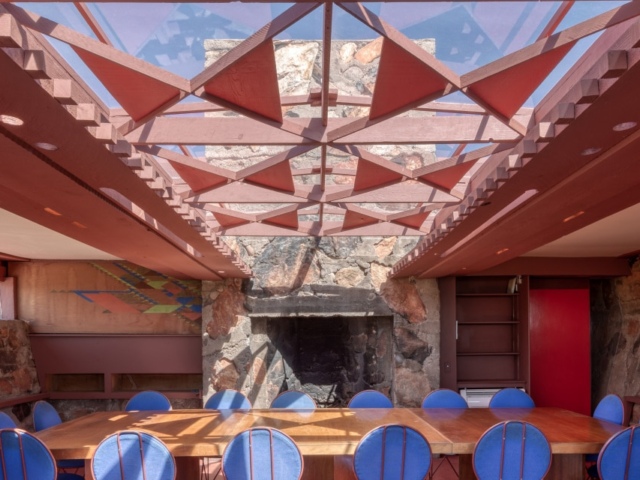
In the third and final part of this series, Frank Lloyd Wright Foundation Taliesin West Preservation Manager Emily Butler reflects on the process of preserving Taliesin West’s Board Room, and discusses some of the finishing touches that helped bring the space to its former glory.
Emily Butler | Nov 1, 2019
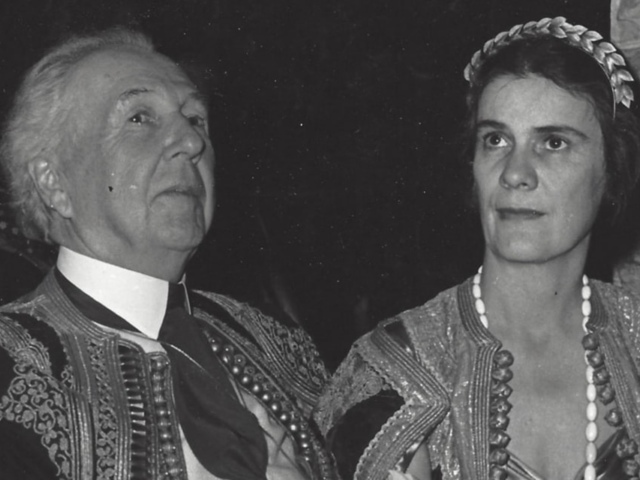
At Frank Lloyd Wright’s two homes Taliesin and Taliesin West, Olgivanna and Frank Lloyd Wright often celebrated the holidays in lavish style including Halloween, where the Wright’s and Taliesin Fellowship dressed in costume and enjoyed a feast.
Frank Lloyd Wright Foundation | Oct 31, 2019
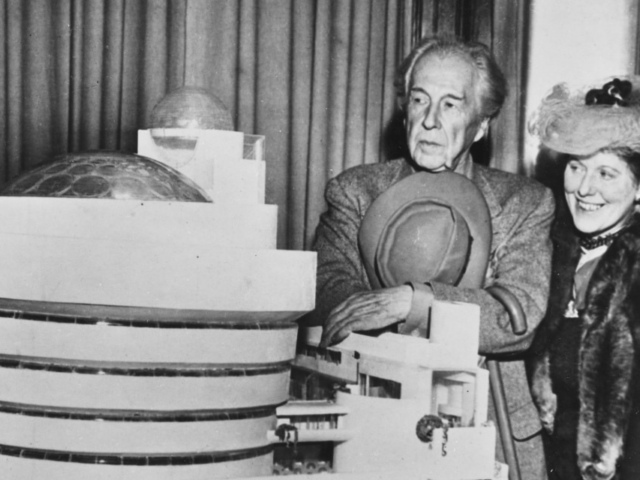
When Frank Lloyd Wright designed the Solomon R. Guggenheim Museum, he was compelled by what he believed the building could be. 60 years after the museum first opened, we reflect on Wright’s persistence, passion, and vision that made this architectural icon possible.
Frank Lloyd Wright | Oct 21, 2019
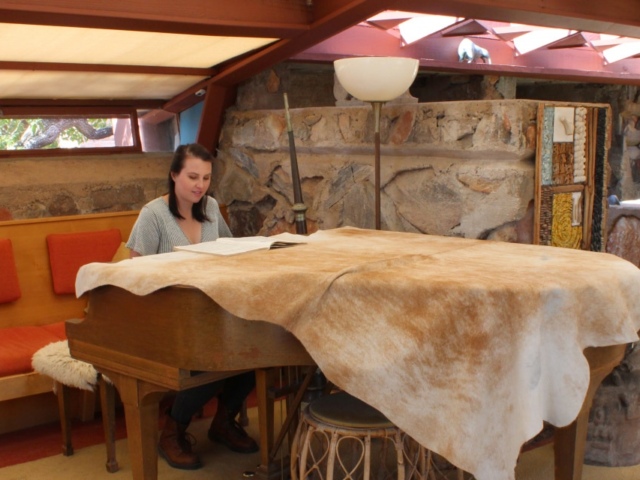
In this installment of her Learning by Doing series, Frank Lloyd Wright Foundation 2018-2019 Graphic Design Fellow, Meagan Vanderhill, explores the role music has played in the Taliesin Fellowship, and how it connects to architecture.
Meagan Vanderhill | Oct 15, 2019
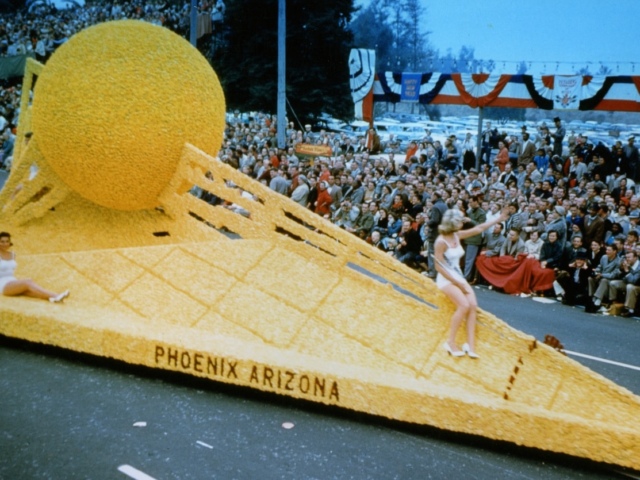
In 1956, Frank Lloyd Wright was commissioned to design a float for the annual Rose Parade in Pasadena, California. The eye-catching geometric float was inspired by the Arizona sunshine, and was awarded first place in its category.
Frank Lloyd Wright Foundation | Oct 14, 2019